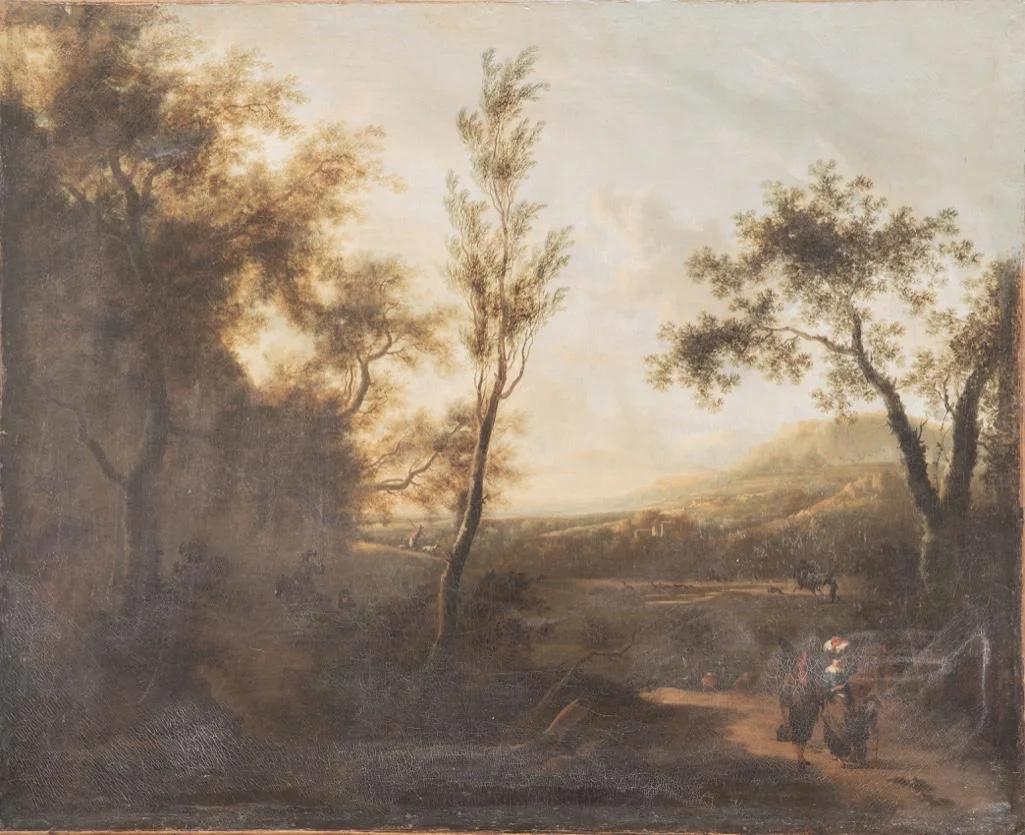
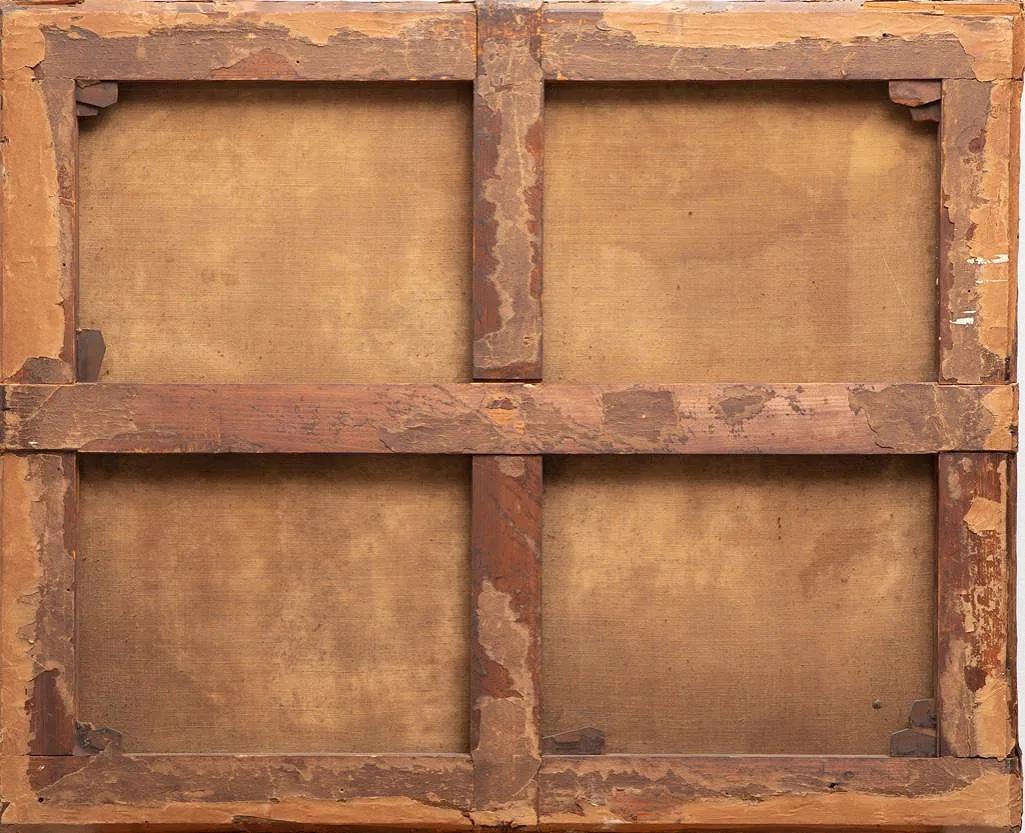
Attribution: Jan Dirksz Both (1618–1652) or circle / follower
The painting is in the style of the so-called "Italianists" of the Utrecht School, to which Jan Dirksz Both belonged – one of the most outstanding representatives of the golden age of Dutch painting. The composition is horizontal, with a strongly developed landscape and Both's characteristic golden, chiaroscuro atmosphere of the setting sun. In the background, a vast, picturesque landscape with a hilly horizon and buildings in the distance is visible, while in the foreground, a small genre scene with figures of wanderers is visible. Noteworthy are the soft modeling of forms, subtle tonal transitions, and masterful use of lighting effects, which create the depth and atmospheric atmosphere typical of the so-called Utrecht Luminism. The theme of the Italian landscape with the motif of the road and wanderers was repeatedly taken up by Jan Both, his brother Andries, and painters of their circle, including Cornelis van Poelenburgh and Herman Saftleven.
Biography
Jan Dirksz Both (born ca. 1618 in Utrecht, died 1652 there) was a Dutch painter and draughtsman of the Golden Age of Netherlandish painting, a representative of the so-called Utrecht Italianists. In his youth, he studied under Abraham Bloemaert and then traveled to France and Italy with his brother Andries. Around 1638, he was in Rome, where he entered the circle of artists associated with the Bentvueghels group and was strongly influenced by the paintings of Claude Lorrain. Both's work is characterized by atmospheric Italian landscapes with soft, golden light, subtle modeling of space, and delicate interplay of light and shadow. He often included small genre scenes featuring travelers, shepherds, and wanderers in his compositions. After returning to Utrecht in 1646, he gained recognition as one of the most outstanding Dutch landscape painters of the 17th century. He died suddenly at the age of about 34, probably as a result of drowning.