Caspar Jele (1814–1893)
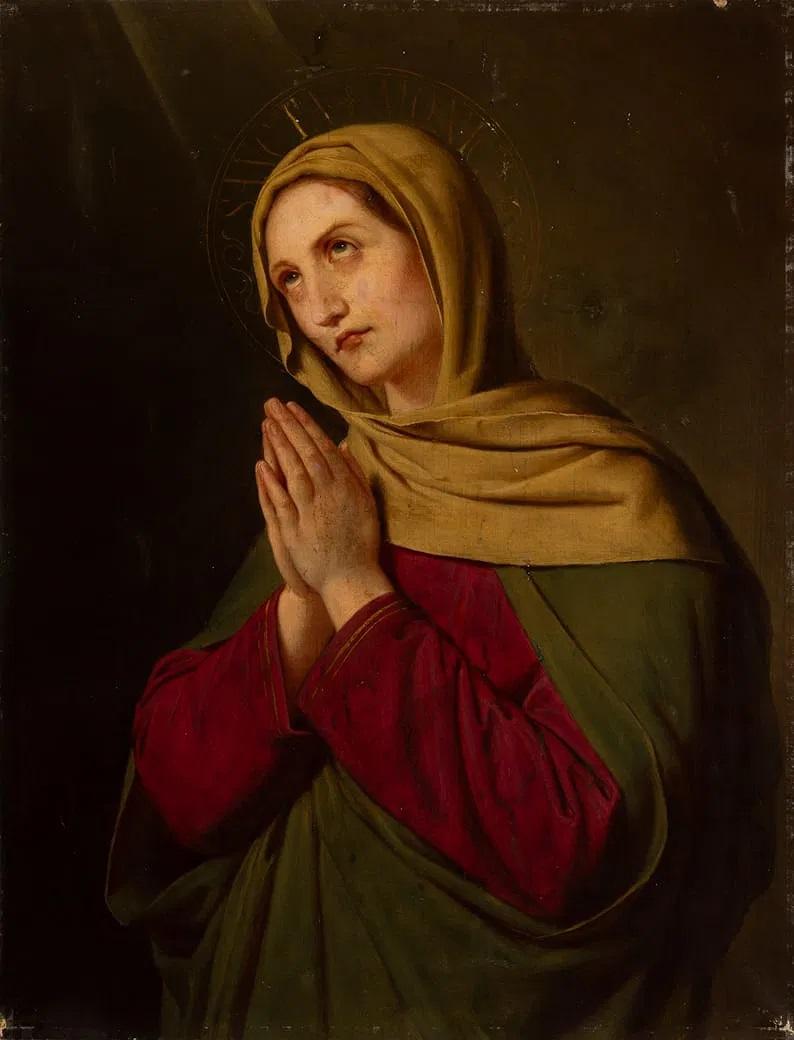
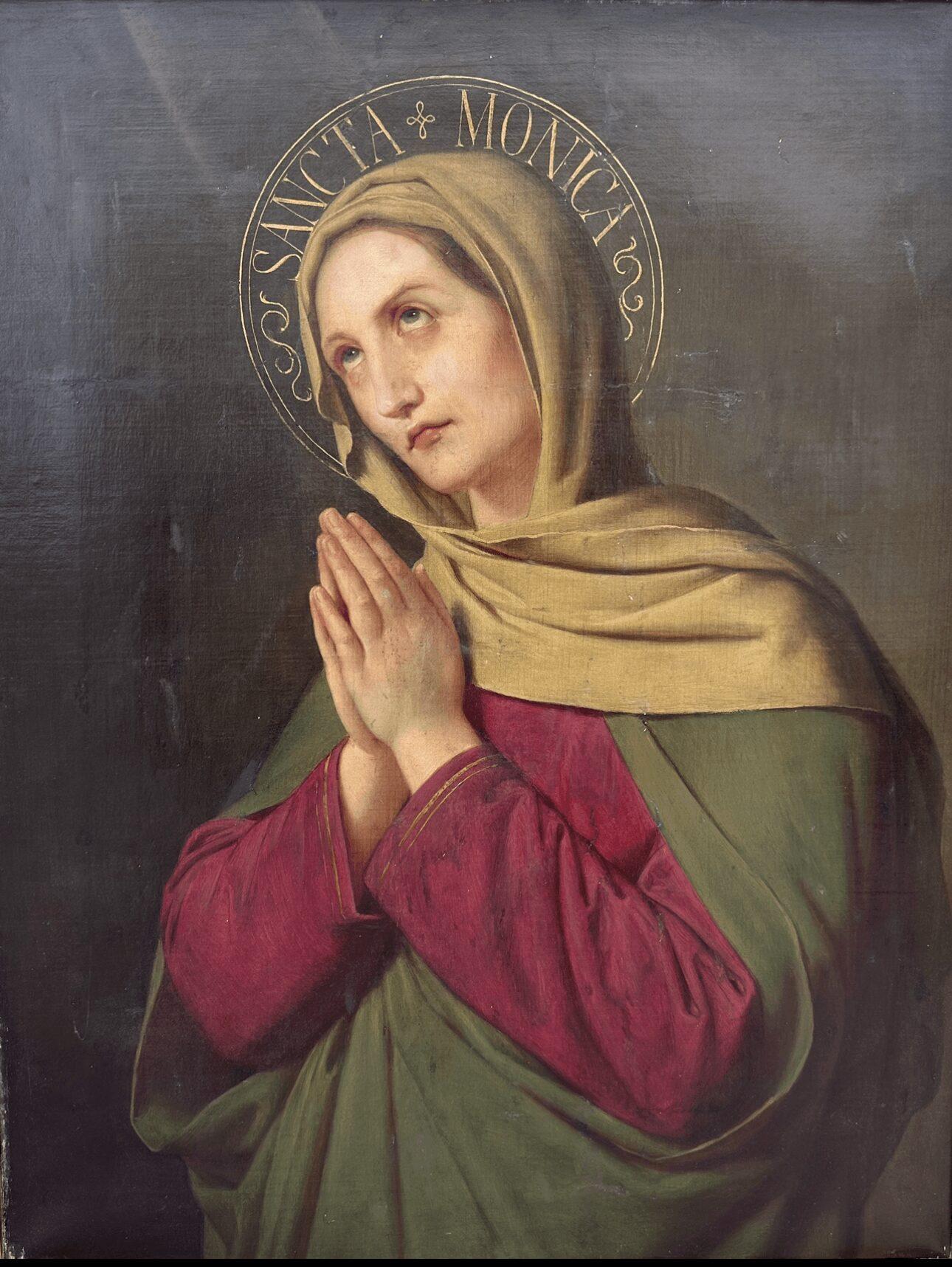
Saint Monica, 1848
An atmospheric religious work by Caspar Jele, one of the leading representatives of the Nazarene movement in Tyrol. It depicts a praying Saint Monica – the mother of Saint Augustine, venerated as the patron saint of mothers and women persevering in prayer. The artist depicted her in a half-length portrait, with her hands folded in a gesture of prayer and her gaze raised heavenward, which gives the depiction an expression of deep spiritual contemplation. Above his head is a halo with the inscription SANCTA MONICA, executed in gilt, emphasizing the sacred nature of the composition. The painting is maintained in the aesthetics characteristic of the Nazarene style: monumental simplicity of form, purity of drawing, symbolic light, and spiritual expression are the main means of expression. The harmonious color palette—dominated by muted greens, ochres, and crimson reds—creates the calm, focused mood characteristic of mid-19th-century religious art.
Biography
Caspar Jele (1814–1893)—Austrian painter, one of the leading representatives of the Nazarene movement in Tyrol. A student of Gebhard Flatz, he studied from 1834 to 1838 at the Academy of Fine Arts in Vienna, strongly influenced by Leopold Kupelwieser and Joseph von Führich. From 1856 to 1884, he taught drawing in Innsbruck. He primarily created religious and altarpieces for numerous churches in Tyrol, Vorarlberg, Salzburg, Upper Austria, Carinthia, and the USA. He also painted portraits, including for Empresses Caroline Augusta and Maria Anna. He was awarded the Gold Cross of Merit with Crown (1884). His work, valued for its spiritual depth and high technical level, is an important part of the legacy of late Catholic Romanticism.